
Say goodbye to visible spider veins with gentle, minimally invasive treatments. Whether on your legs or face, our quick procedures help reveal clearer, smoother skin—so you can feel confident in your appearance again, with little to no downtime.
Our Full Spider Veins Treatment Process
Initial Consultation
- We’ll start by chatting about your concerns, symptoms, and medical history. Then we’ll assess the affected areas -sometimes using ultrasound – to understand what’s going on beneath the surface.
Your Treatment
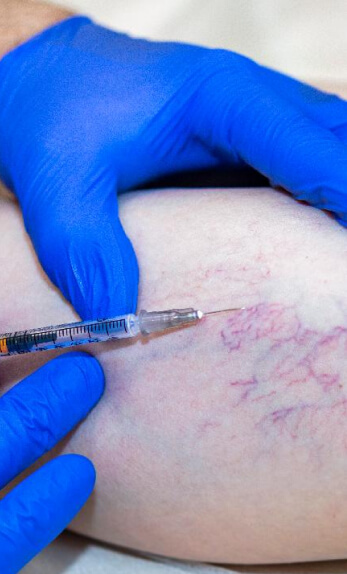
- Depending on your needs, we’ll use sclerotherapy and gentle surface treatments to target and fade the veins. We’ll talk you through the process, what to expect, and any risks beforehand.
Aftercare & Results
- You’ll receive clear aftercare instructions and may be asked to wear compression stockings for best results. We’ll schedule a follow-up to check your progress and give tips to help prevent new spider veins from forming.
Spider Veins Treatment – FAQ
What are the most common causes of spider veins?
The most common causes of spider veins include genetic factors, hormonal changes, prolonged standing or sitting, and age-related weakening of blood vessels. These factors lead to the malfunctioning of valves within the veins, causing blood to pool and veins to dilate.
What is the difference between spider veins and varicose veins?
Spider veins are small, fine lines that can appear red, purple, or blue, and are usually not raised above the skin’s surface. Varicose veins, on the other hand, are larger, bulging veins that are often more visually prominent and can cause significant discomfort.
Can spider veins lead to health problems if untreated?
Spider veins themselves are generally not dangerous and do not lead to serious health problems. However, their presence can sometimes be indicative of underlying venous insufficiency, which, if left untreated, could lead to more serious conditions.
What are the options for spider veins treatment on the face?
Treatment options for spider veins on the face include sclerotherapy, which effectively reduces their appearance by targeting and collapsing the veins without damaging the surrounding skin. Other options may include intense pulsed light (IPL) treatments, depending on the specific characteristics of the veins.